
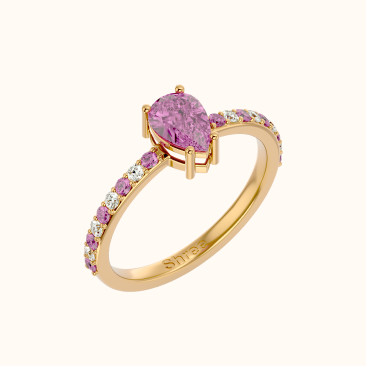

Pink tourmaline is a gemstone that captures hearts with its soft blush tones and vibrant magentas. Its captivating colour and emotional significance make it a favourite in fine jewellery, but understanding its origins and geological formation adds another layer of appreciation. From deep within the Earth’s crust to the hands of skilled artisans, pink tourmaline has a fascinating journey.
1. What Is Pink Tourmaline?
Pink tourmaline is part of the tourmaline family, a group of boron silicate minerals that come in nearly every colour of the rainbow. Its pink hues are primarily due to traces of manganese, while other elements influence the variations in tone and saturation. Tourmaline’s name originates from the Sinhalese word “turmali,” used to describe multicoloured gemstones found in Sri Lanka.
Tourmaline’s unique properties, including its durability (7–7.5 on the Mohs hardness scale) and its pleochroism—where the stone displays different colours when viewed from different angles—make it a captivating choice for jewellery enthusiasts.
2. Geological Formation of Pink Tourmaline
Pink tourmaline forms deep within the Earth under high-pressure and high-temperature conditions, often in igneous and metamorphic rocks. Its creation involves several geological processes:
-
Pegmatite Formation: Most high-quality pink tourmaline comes from pegmatites, which are coarse-grained igneous rocks. These rocks are rich in rare elements, providing the ideal environment for tourmaline crystals to grow.
-
Hydrothermal Processes: In some locations, tourmaline forms through hydrothermal activity, where mineral-rich hot water interacts with rocks, depositing crystals in cavities and fissures.
-
Trace Elements: The presence of manganese gives pink tourmaline its signature colour, while iron and lithium can subtly influence the tone and depth of the hue.
These processes occur over millions of years, resulting in crystals that are both structurally strong and visually stunning.
3. Where Pink Tourmaline Is Found
Pink tourmaline has been discovered in various locations around the world, each offering unique colour characteristics:
-
Brazil: One of the largest producers, known for vivid, high-quality pink stones.
-
Afghanistan and Pakistan are home to some of the deepest pink and magenta tourmalines, often prized for jewellery.
-
Madagascar: Produces bright pink and pastel shades with excellent clarity.
-
United States: California and Maine are notable sources, especially for historically significant mines producing fine-quality tourmaline.
-
Nigeria and Mozambique: Emerging sources offering vibrant stones with excellent saturation.
Each region imparts subtle differences in colour, crystal structure, and overall character, making pink tourmaline a gemstone with a global and diverse heritage.
4. Historical Significance
Pink tourmaline has long been treasured in various cultures:
-
Ancient Egypt: Valued for its beauty and believed to bring protection.
-
Victorian Era: Often used in romantic jewellery, symbolising love and emotional healing.
-
Modern Times: Continues to be a gemstone of choice for meaningful gifts, particularly as an October birthstone.
Its enduring appeal is tied not only to its beauty but also to its perceived emotional and spiritual properties.
5. How Knowledge of Origins Enhances Appreciation
Understanding the origins and geology of pink tourmaline adds depth to its value:
-
Authenticity: Knowing where the gemstone comes from ensures it is genuine and ethically sourced.
-
Design Considerations: Jewellers can select stones based on origin, colour, and clarity to create the perfect piece.
-
Connection to Earth: Appreciating the geological journey—from deep within the Earth to a finished jewellery piece—enhances the emotional significance of wearing it.
6. Caring for Pink Tourmaline Jewellery
The geological origins of pink tourmaline underscore the importance of careful handling:
-
Avoid Heat and Chemicals: High temperatures and harsh chemicals can alter colour or damage the stone.
-
Proper Cleaning: Use mild soap, lukewarm water, and a soft brush.
-
Safe Storage: Keep it separate from harder gemstones to prevent scratches.
Conclusion
Pink tourmaline is a gemstone with a remarkable story, from its formation deep within the Earth to its status as a symbol of love and compassion. Its geological origins, trace element composition, and global sources make it a truly unique treasure in the world of jewellery.
At Shree Jewellery, we celebrate the beauty and heritage of pink tourmaline, offering pieces that honour both its natural splendour and emotional significance. Choosing a pink tourmaline isn’t just about aesthetics—it’s about owning a piece of Earth’s history, carefully crafted to shine in your collection.